Authors: Mr. Sandeepan Saha, Dr. Sandip Sarkar, Mr. Biplab Saha, Dr. Avik De, Mr. Gourab Mondal
ISBN-13: 9789349554108
Format: Paperback and e-book
Pages: 107
Product Dimensions: 6 x 9 inch
Publisher: Bharat Global Publications
Mr. Sandeepan Saha is currently working as Assistant Professor for the Department of Civil Engineering of Greater Kolkata College of Engineering and Management, JIS Group. He has completed his B.Tech in Civil Engineering from Maulana Abul Kalam Azad University of Technology (formerly known as West Bengal University of Technology), India, M.E. in Civil Engineering with specialization in Soil Mechanics and Foundation Engineering from Jadavpur University, India, Master of Construction Management from Auckland University of Technology, New Zealand, and MBA in Strategy and Leadership from Jain University, India. Currently he is pursuing PhD in Engineering from the Department of Civil Engineering of Jadavpur University, India. He has published more than 15 numbers of research papers in journals of International Repute. He has also patented several innovations. Mr. Sandeepan Saha is also a Project Management Professional (PMP) accredited from PMI-USA, and a Lead Auditor for ISO 45001: 2018 and ISO 9001:2015, followed by Black Belt in Lean Six Sigma. He is also a member of Indian Geotechnical Society, Indian Ceramic Society and Project Management Institute (PMI) of the United States of America.
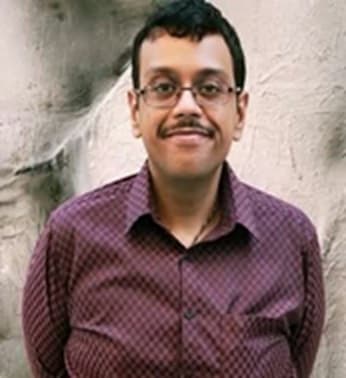
Dr. Sandip Sarkar is a distinguished Assistant Professor in the Department of Civil Engineering at Greater Kolkata College of Engineering and Management, JIS Group. His research interests are broad in the field of Civil Engineering, with a special emphasis on creative approaches to environmental sustainability, water resource management, and the use of Remote Sensing & Geographic Information in infrastructure development. He earned his Bachelor of Technology in Civil Engineering from Maulana Abul Kalam Azad University of Technology (formerly West Bengal University of Technology). He further specialized in Water Resources Engineering, completing his Master of Engineering and later obtaining his Ph.D. from Indian Institute of Engineering, Science and Technology (IIEST), Shibpur, India. Dr. Sandip Sarkar has an impressive research portfolio, having published multiple research papers in internationally reputed journals. His innovative mindset has led to several patented inventions, showcasing his experience in engineering advancements and problem solving in civil infrastructure.
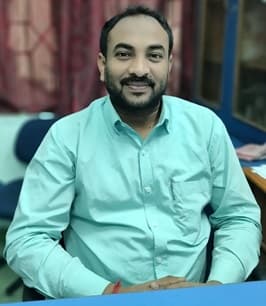
Mr. Biplab Saha is an esteemed academician and civil engineer with a strong foundation in research and teaching. Holding a Master's degree from IIEST Shibpur, he has honed his expertise in Civil Engineering, specializing in Water Resources Engineering, Remote Sensing, and GIS technologies. Currently serving as an Assistant Professor and HOD at the Department of Civil Engineering, Asansol Engineering College under Maulana Abul Kalam Azad University of Technology. He brings a wealth of knowledge and leadership to the academic arena. His research interests span a wide spectrum within Civil Engineering, focusing particularly on innovative solutions in water resources management, environmental sustainability, and the integration of remote sensing and GIS technologies in infrastructure development. With a passion for interdisciplinary collaboration and a commitment to advancing the field of civil engineering. He continues to inspire and empower the next generation of engineers and researchers. His contributions to academia and the broader engineering community reflect his unwavering dedication to excellence and innovation.
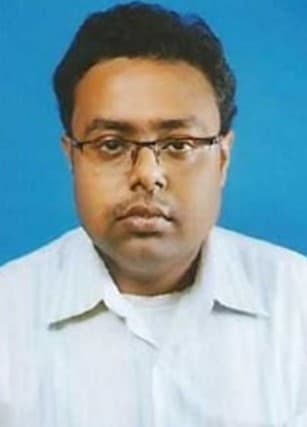
Dr. Avik De completed his PhD from the department of Chemical Engineering, University of Calcutta in the year 2019 and presently serving as an assistant professor, Department of chemistry, Asansol Engineering College. He has 15 years of teaching experience in the field of engineering Chemistry and Environmental science. He has published 15 no of articles in indexed peer reviewed International and national journals along with numerous book chapter and conference papers. He was the co-investigator of DST (state) funded research project. He has guided many post graduates students in their final dissertations. Currently working in the field of environmental nano technology, Arsenic removal and advanced oxidation process (AOPs).
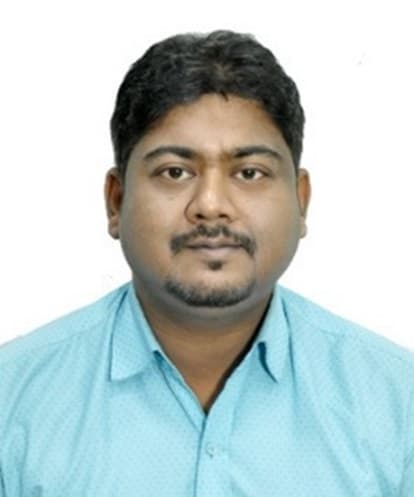
Mr. Gourab Mondal is an esteemed academician and civil engineer with a strong foundation in research and teaching. Holding a Master's degree from NIT Calicut, he has honed his expertise in Civil Engineering, specializing in Traffic and Transportation Planning. Currently serving as an Assistant Professor at the Department of Civil Engineering, Asansol Engineering College under Maulana Abul Kalam Azad University of Technology. He brings a wealth of knowledge and leadership to the academic arena. His research interests span a wide spectrum within Civil Engineering, focusing particularly on innovative solutions in Traffic Engineering, Pavement materials, environmental sustainability, and Transportation Planning in infrastructure development. With a passion for interdisciplinary collaboration and a commitment to advancing the field of civil engineering.
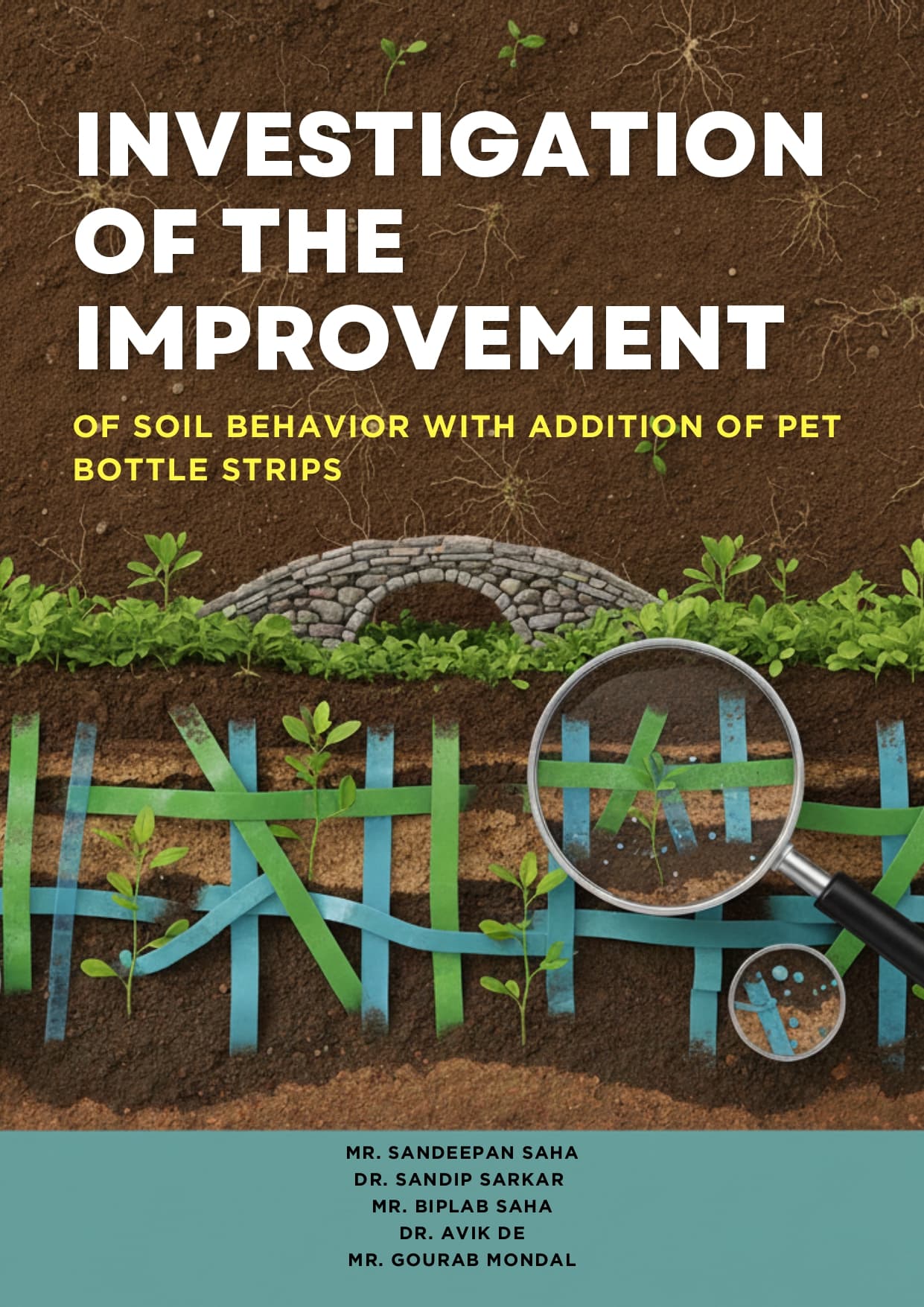
The book presents a comprehensive experimental and analytical study on the use of waste plastic, particularly PET bottle strips, as randomly distributed fiber reinforcement (RDFS or ply soil) for improving the engineering properties of clayey soils. It integrates geotechnical engineering principles with environmental sustainability by addressing the growing challenge of plastic waste disposal through its beneficial reuse in ground improvement applications.
The study begins by highlighting the environmental problem of increasing plastic waste, especially low-density polyethylene (LDPE) and polyethylene terephthalate (PET) products, which occupy a significant volume of landfills while having limited recycling potential. The book argues that instead of treating waste plastic as a disposal burden, it can be effectively utilized as a soil reinforcement material, thereby solving two problems simultaneously: waste management and poor soil performance
Theoretical background is provided on soil stabilization and soil reinforcement techniques, categorizing them into soil stabilization using binders, reinforcement with continuous planar members, and reinforcement with randomly mixed fibers (ply soil). Special emphasis is placed on RDFS, which differs from conventional reinforced soil systems by maintaining isotropy in strength due to random fiber orientation. Historical and contemporary examples, including natural fiber reinforcement and plant root analogies, are discussed to establish the conceptual basis of fiber-reinforced soils
An extensive literature review forms a major portion of the book, covering several decades of experimental and theoretical research on fiber-reinforced soils. Studies involving synthetic, natural, and waste plastic fibers are critically reviewed, focusing on parameters such as fiber content, aspect ratio, orientation, confining pressure, and soil type. The review consistently demonstrates that fiber inclusion improves shear strength, ductility, residual strength, bearing capacity, and energy absorption, while reducing brittleness and post-peak strength loss. The concept of critical confining stress, beyond which fibers become effective in reinforcing soil, is also discussed in detail
The motivation and objectives of the present study are clearly defined: to investigate the improvement in strength and deformation characteristics of clayey soil mixed with waste PET bottle strips and to evaluate the tensile properties of the plastic strips themselves. The scope includes laboratory testing on pure clayey soil and clay amended with 10% and 20% sand, reinforced with varying percentages (0.5%–2%) and aspect ratios of PET strips
The book elaborates on the materials used, detailing soil characterization as per IS codes and preparation of PET bottle strips of controlled dimensions. A well-structured test program is described, including Atterberg limits, grain size distribution, Proctor compaction, unconfined compressive strength tests, and unconsolidated undrained triaxial tests. Testing procedures are explained systematically, ensuring reproducibility and technical rigor
In the results and discussion, the study demonstrates that the inclusion of PET bottle strips significantly affects soil behavior. Maximum dry density generally increases and optimum moisture content decreases with fiber inclusion up to an optimum fiber content of about 1%. Unconfined compressive strength and undrained shear strength show notable improvement up to this optimum level, beyond which strength decreases due to fiber interference and poor stress transfer. The angle of internal friction improves with fiber addition and increased sand content. Aspect ratio plays a critical role, with moderate ratios proving more effective than higher ones
The book concludes that waste PET bottle strips are an effective, economical, and eco-friendly reinforcement material for improving weak clayey soils. An optimum fiber content of around 1% is identified for maximum benefit. The study reinforces the potential of plastic waste reuse in geotechnical engineering, contributing both to sustainable construction practices and environmental protection
Overall, the book successfully combines environmental engineering, geotechnical experimentation, and practical design insights, making it a valuable reference for researchers, students, and practicing engineers interested in sustainable ground improvement techniques.