
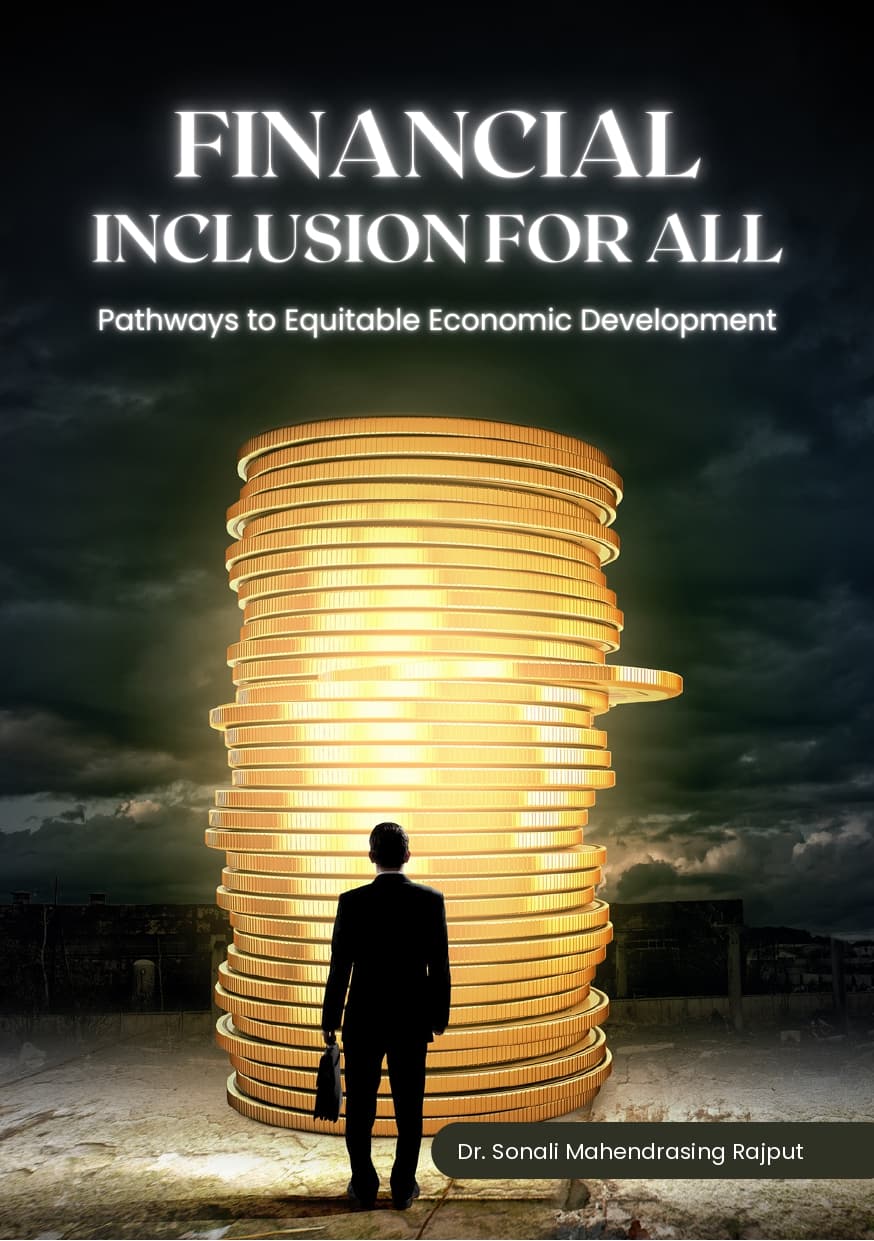
Authors: Dr. Sonali Mahendrasing Rajput
ISBN-13: 9789349554450
Format: Paperback and e-book
Pages: 94
Product Dimensions: 6 x 9 inch
Publisher: Bharat Global Publications

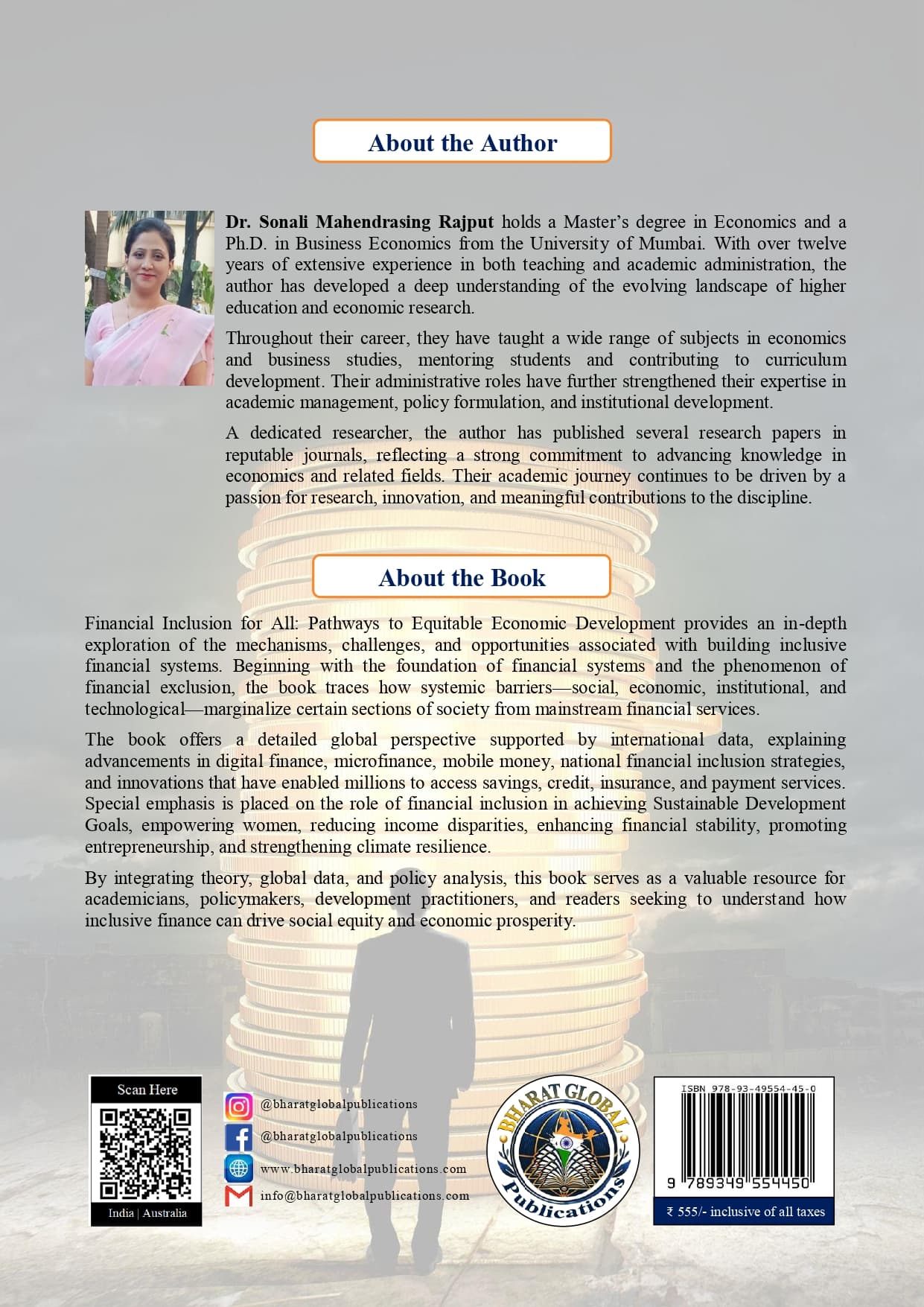
Dr. Sonali Mahendrasing Rajput holds a Master’s degree in Economics and a Ph.D. in Business Economics from the University of Mumbai. With over twelve years of extensive experience in both teaching and academic administration, the author has developed a deep understanding of the evolving landscape of higher education and economic research.
Throughout their career, they have taught a wide range of subjects in economics and business studies, mentoring students and contributing to curriculum development. Their administrative roles have further strengthened their expertise in academic management, policy formulation, and institutional development.
A dedicated researcher, the author has published several research papers in reputable journals, reflecting a strong commitment to advancing knowledge in economics and related fields. Their academic journey continues to be driven by a passion for research, innovation, and meaningful contributions to the discipline.
Financial Inclusion for All: Pathways to Equitable Economic Development provides an in-depth exploration of the mechanisms, challenges, and opportunities associated with building inclusive financial systems. Beginning with the foundation of financial systems and the phenomenon of financial exclusion, the book traces how systemic barriers—social, economic, institutional, and technological—marginalize certain sections of society from mainstream financial services.
The book offers a detailed global perspective supported by international data, explaining advancements in digital finance, microfinance, mobile money, national financial inclusion strategies, and innovations that have enabled millions to access savings, credit, insurance, and payment services. Special emphasis is placed on the role of financial inclusion in achieving Sustainable Development Goals, empowering women, reducing income disparities, enhancing financial stability, promoting entrepreneurship, and strengthening climate resilience.
By integrating theory, global data, and policy analysis, this book serves as a valuable resource for academicians, policymakers, development practitioners, and readers seeking to understand how inclusive finance can drive social equity and economic prosperity.